
The Loss Aversion Secret to Crafting Viral Short-Form Headlines
Master the psychology of loss aversion to create viral short-form headlines that stop the scroll and force engagement through evolutionary fear.
You believe your content fails because your hooks lack "value."
You are wrong.
Your content fails because you are trying to promise a reward to a brain that is biologically wired to ignore it.
The human ego is a fragile, defensive mechanism.
It does not care about "getting ahead" nearly as much as it cares about "not falling behind."
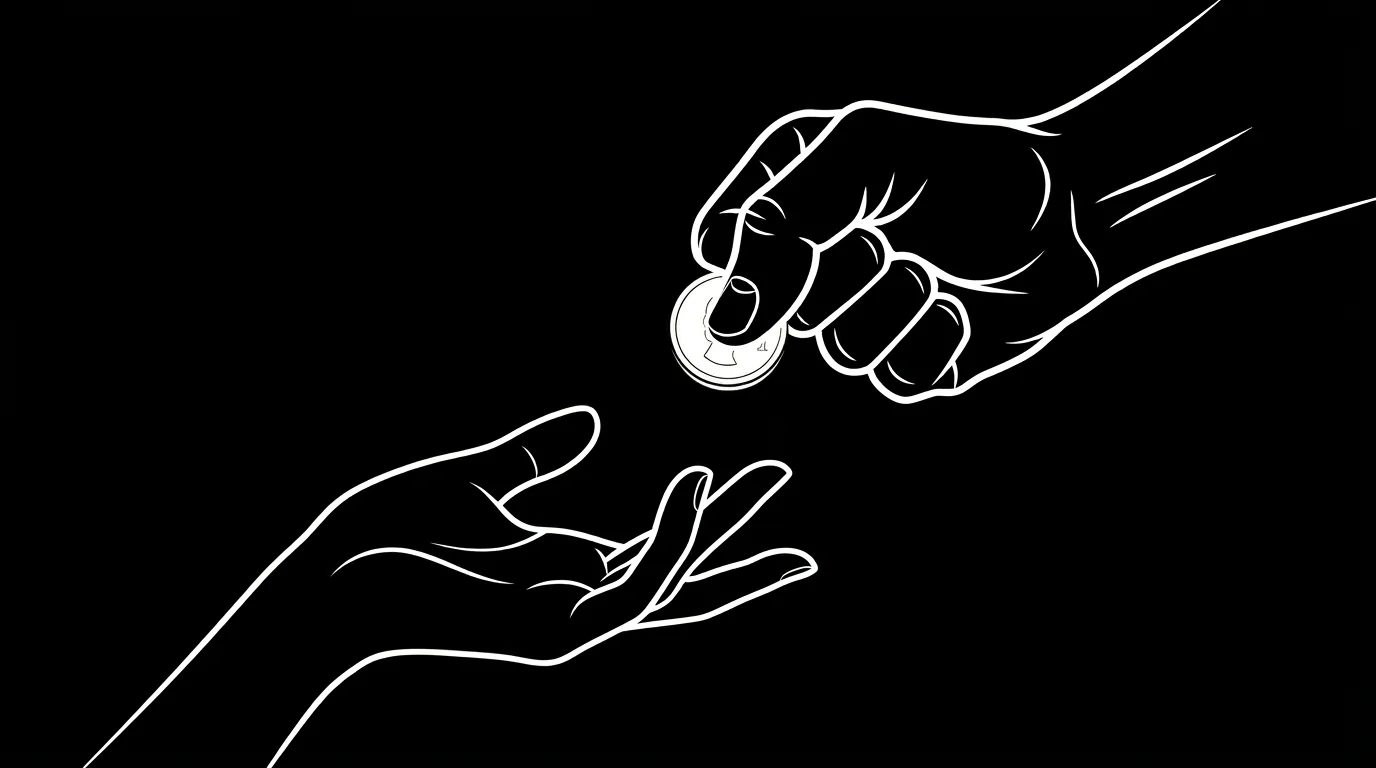
If you offer a stranger ten dollars, they might smile.
If you take ten dollars out of their pocket, they will remember your face for the next decade.
This is the foundation of Loss Aversion.
It is the unseen gravity that pulls a thumb toward a screen.
If you want to master the art of the viral short-form headline, you must stop selling the dream.
You must start highlighting the nightmare.
The Cognitive Architecture of Fear
Your audience is arrogant enough to believe they already know the "tips and tricks" of your niche.
They have seen the "Top 5 Ways to Save Money" videos.
They have scrolled past the "How to Build a Six-Pack" tutorials.
These headlines fail because they assume the reader feels a "lack."
But the modern consumer doesn't feel a lack.
They feel a desperate need to protect what they already have.
The Rule of 4: Why Loss Wins
- Survival Bias: Evolutionary biology prioritizes avoiding a predator over finding a berry bush.
- Endowment Effect: People value things they already possess more than things they could acquire.
- Regret Anticipation: The pain of "missing out" is sharper than the joy of "joining in."
- Status Protection: In a social hierarchy, losing rank feels like a physical threat.
Loss is a more potent motivator than gain because pain leaves a deeper neurological scar.
The Synthesis Hook: Why "Value" is Incomplete
Marketing gurus tell you to "provide value."
Growth hackers tell you to "use clickbait."
Both are partially right, but both are fundamentally incomplete.
Pure value is boring because it requires work.
Pure clickbait is hollow because it breaks trust.
The synthesis is Negative Value Framing.
You provide the exact same information, but you frame it as a rescue mission rather than an upgrade.
Instead of telling someone how to "get rich," you tell them why they are "staying poor."
| Traditional Gain Hook | Loss Aversion Hook | Why it Works |
|---|---|---|
| 5 Steps to Better Sleep | Stop Killing Your Brain with These 5 Sleep Habits | It frames current behavior as self-destruction. |
| How to Grow on TikTok | Why TikTok is Shadowbanning Your Specific Content | It triggers the fear of an invisible enemy. |
| Save $500 Next Month | You are Overpaying $500 for These Basic Services | Nobody wants to be the "sucker" who overpays. |
The Progression Ladder of Retention
To move a viewer from a "scroller" to a "follower," you must guide them up the ladder of concern.
Awareness → Anxiety → Authority → Action
The headline creates the anxiety.
The content establishes your authority.
The conclusion provides the action.
If you skip the anxiety, the viewer never stops scrolling.
If you skip the authority, the viewer feels manipulated.
You are not just a creator.
You are a digital paramedic.
Categorical Labeling: The Anatomy of a Hook
To write a headline that actually converts, you must use specific psychological triggers.
The Leaking Bucket. This highlights a current drain on resources. "You are losing $20 every time you fill your gas tank."
The Invisible Tax. This points to a cost the viewer didn't know they were paying. "The hidden social cost of your 'quiet' personality."
The Looming Deadline. This weaponizes the fear of time running out. "The 2024 tax loophole that closes in 48 hours."
The Exclusion Risk. This targets the fear of being left behind by peers. "Why your competitors are already using AI to replace your job."
The most effective headlines don't offer a ladder; they point out the fire.
Declarative Absolutism in Copywriting
There is no room for "maybe" in a 7-second attention span.
You must speak with the authority of a god and the urgency of a fire alarm.
The pattern is clear.
If your headline contains the words "I think" or "Some people say," you have already lost.
The viewer wants a leader, not a philosopher.
They want to be told what is happening to them.
"This is the reason your views are dropping."
"You are making this mistake."
"Your bank is lying to you."
These are not suggestions.
They are observations of a reality the viewer is too distracted to see.

The "Dirt-Simple" Psychology of the Ego
Think of your audience like a man holding a heavy bag of gold while standing over a pit of snakes.
If you yell, "Hey, I have more gold over here!" he won't move.
He is too worried about the snakes.
He is too worried about dropping his bag.
But if you yell, "Your bag has a hole in it!" he will move instantly.
He will drop everything to inspect the damage.
He will look at you because you saved him from a loss.
High-level discourse is just a fancy way of describing this primal reaction.
We call it "Loss Aversion" in boardrooms.
In the jungle, we called it "Survival."
The Master Formula for Short-Form Viral Headlines
The formula is a simple equation of friction and fear.
[Current Action] + [Invisible Cost] + [Time Constraint]
"Posting every day (Action) is killing your reach (Cost) starting today (Time)."
"Saving money in a 401k is the fastest way to lose your retirement."
"That 'healthy' salad is actually spiking your cortisol levels."
Each of these headlines attacks the reader's sense of security.
It forces them to stop and validate their own choices.
They aren't clicking because they like you.
They are clicking because they need to prove you wrong to protect their ego.
Once they click, you have three seconds to prove you are right.
Conclusion: The Ethics of the Hook
Mastering loss aversion is not about lying.
It is about translation.
You are translating the benefit of your content into the language of the human brain.
The brain speaks "Threat" much louder than it speaks "Opportunity."
If you truly believe your content can help someone, you have a moral obligation to make them click.
If that requires tapping into their fear of loss, then you must do it.
The alternative is letting your valuable message die in the graveyard of the "ignored."
Stop asking people to "gain" something and start showing them what they are already losing.
Loss aversion does not stop at the headline. The framing effect applies the same psychological lever to your entire value proposition, not just the hook.
A great hook on a mediocre video is a waste. Audit your TikTok content before you post to make sure the rest of the video earns the attention the hook pulled in.
Track how your hooks perform with the live view counter. The drop-off point tells you exactly where the hook stopped doing its job.