
How to Reverse-Engineer Your Competitors' Best Hooks
Learn the exact framework to deconstruct viral content hooks and rebuild them for your own brand to dominate your industry's attention economy.
You are likely failing at content because you think "originality" is a virtue.
In reality, your obsession with being unique is a mask for your lack of data.
You watch your competitors go viral with inferior products.
You assume they are lucky.
The truth is more clinical.
They have cracked the code of the Attention Threshold.
They aren't smarter than you.
They are simply better at using the psychological tripwires that stop the scroll.
If you want to win, you must stop "creating" and start deconstructing.
The Myth of the Creative Genius
Most marketers believe hooks are born from a flash of inspiration.
This is a lie told by people who want to look talented.
Hooks are engineered.
They are the result of specific linguistic patterns that trigger the lizard brain.
The "Creative Genius" is just someone who has internalized these patterns.
You don't need a muse.
You need a scalpel.
The Synthesis Hook: Strategy vs. Luck
The debate over viral content usually falls into two camps.
The Purists believe that high-quality content will naturally find an audience through merit.
The Growth Hackers believe that clickbait is the only thing that matters, regardless of the value.
Both are partially right.
Both are fundamentally incomplete.
Quality without a hook is a library in a desert.
A hook without quality is a scam that kills your brand.
The truth exists in the Engineered Resonance.
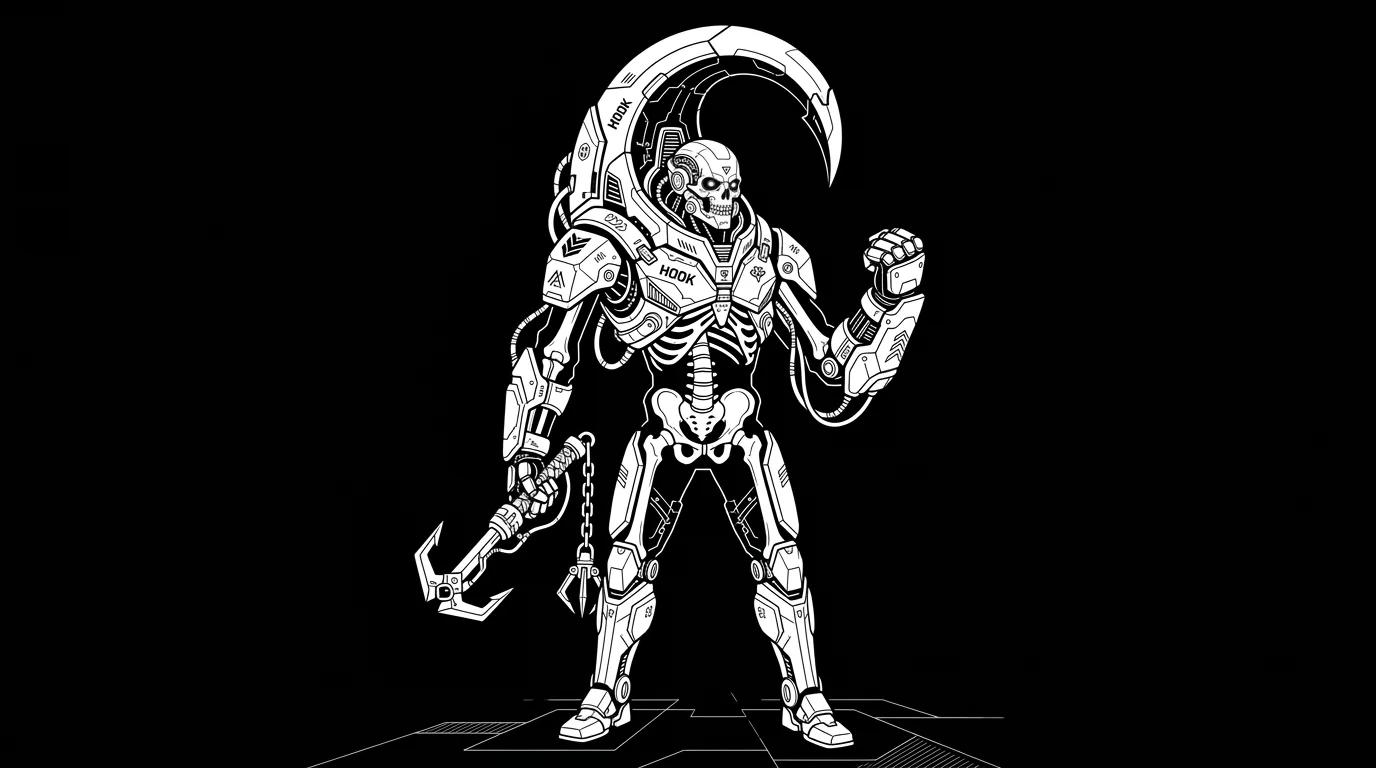
You must use the competitor’s proven "skeleton" to house your unique "muscle."
The Anatomy of a High-Performing Hook
To reverse-engineer a hook, you must see past the words.
You must identify the Internal Trigger.
Every viral hook relies on one of four psychological levers.
- The Gap of Knowledge: Highlighting a specific thing the reader doesn't know.
- The Threat of Loss: Warning the reader that their current path leads to failure.
- The Counter-Intuitive Truth: Stating something that contradicts common sense.
- The Specific Promise: Offering a concrete result for a minimal time investment.
When you see a competitor’s post with 10,000 likes, don't look at the topic.
Look at the lever.
The progression of a viewer's brain looks like this:
Visual Pattern Break → Emotional Spike → Logic Validation → Engagement.
If you skip the emotional spike, the logic never matters.
The Deconstruction Framework
You cannot copy a hook word-for-word.
That is plagiarism, and the algorithm will punish your lack of "Account Velocity."
Instead, you must extract the Semantic DNA.
| Element | Purpose | How to Identify |
|---|---|---|
| The Anchor | Grounds the reader in a known reality. | Look for industry keywords or common pain points. |
| The Pivot | Shifts the perspective or creates tension. | Look for words like "But," "Actually," or "Stop." |
| The Payoff | Promises a solution or a secret. | Look for the "How-to" or the "Revealed" segment. |
| The Urgency | Forces an immediate action. | Look for time constraints or scarcity language. |
The Progression Ladder of Hook Mastery
To move from a novice to an authority, you must climb the ladder of deconstruction.
Observation → Imitation → Variation → Innovation.
Most people stay at Observation.
They look at what works.
They feel jealous.
They change nothing.
You must move to Variation.
How to Strip a Hook to Its Studs
Let's take a common competitor hook: "I spent $10,000 on Facebook ads so you don't have to. Here are the 3 things I learned."
This feels simple.
It is actually a masterclass in psychological framing.
The Authority Label: "I spent $10,000." This signals that the person has "Skin in the Game." It tells the reader they are getting expensive information for free.
The Savior Frame: "So you don't have to." This positions the creator as a protector. It appeals to the reader's laziness and fear of loss.
The Numerical Constraint: "3 things." The brain loves odd numbers. It promises a quick finish.
To reverse-engineer this, you replace the variables while keeping the math.
[Sacrifice / Investment] + [Benefit to Reader] + [Quantified Insight].
Your version becomes: "I read 500 pages of tax code so you can keep your profit. Here are the 4 deductions you are missing."
The "Vibe" is different.
The "Math" is identical.
The pattern is clear: Success is a repeatable formula, not a random event.
The Categorical Labeling of Hook Types
You need to know which "Bucket" your competitor is using.
The Villain Hook This identifies a common enemy. "Your boss is lying to you about remote work." It creates an "Us vs. Them" mentality.
The Transformation Hook This shows a radical change. "How I went from $0 to $10k in 30 days." It uses the "Before and After" trope to spark envy.
The Listicle Hook This promises organization in a chaotic world. "7 tools that will save you 10 hours a week." It appeals to the desire for efficiency.
The "Stop" Hook This uses a pattern interrupt. "Stop using ChatGPT to write your emails." It creates immediate anxiety that the reader is doing something wrong.
Analyzing the "Engagement Velocity"
You must look at the data before you commit to a hook.
Don't just look at the total view count.
Look at the Engagement Ratio.
Total Views / (Likes + Comments + Shares) = The Resonance Score.
If a video has 1 million views but only 500 likes, the hook was "Clickbait."
The audience felt cheated.
If a video has 10,000 views and 2,000 likes, the hook was "High-Intent."
That is the hook you want to steal.
High-intent hooks lead to conversions.
Clickbait hooks lead to "Ghost Followers" who never buy.
The Integration Phase
Once you have deconstructed the hook, you must apply your Unique Insight.
This is where your arrogance becomes an asset.
You know your product is better.
You know your perspective is sharper.
Use the competitor's hook as the "Doorway."
Once the reader is inside the room, give them the "Real Talk" they can't get anywhere else.
Use low-brow imagery to explain high-concept ideas.
Don't talk about "Synergistic Marketing Optimization."
Talk about "Making your ads work like a 24/7 vending machine."
The simpler the language, the deeper the hook sinks.
Common Mistakes in Reverse-Engineering
You will be tempted to change too much.
You will think, "I should make this more professional."
Professionalism is often a synonym for "Boring."
If the competitor used a "Slang" word, there is a reason.
It builds rapport.
If the competitor used a "Messy" background, there is a reason.
It looks authentic.
The Pattern of Failure: Over-editing → Removing the Tension → Diluting the Message → Zero Views.
Stick to the formula until you have enough data to break it.
Conclusion: The Path to Content Dominance
Reverse-engineering your competitors' hooks is not about being a copycat.
It is about understanding the "Physics of Attention."
You are learning the rules so you can eventually rewrite them.
- Find 10 high-performing posts in your niche.
- Strip away the specific topic to find the psychological lever.
- Rewrite the hook using the [Variable] + [Math] formula.
- Inject your unique, high-value insight.
The market doesn't care about your feelings or your "original" ideas.
The market cares about what stops the thumb from scrolling.
Master the hook, and you master the market.
Efficiency is the only true competitive advantage in a world of infinite noise.